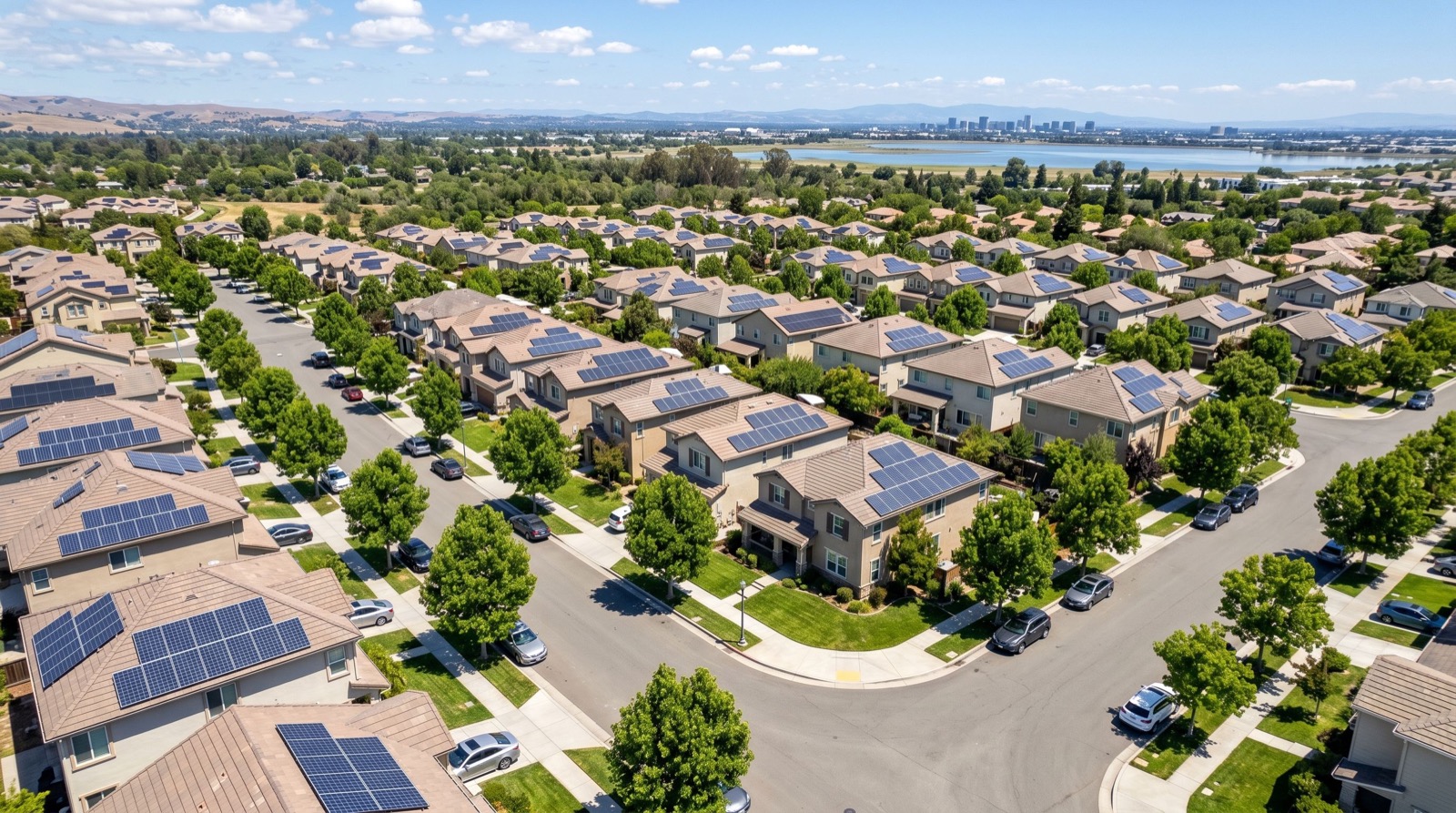
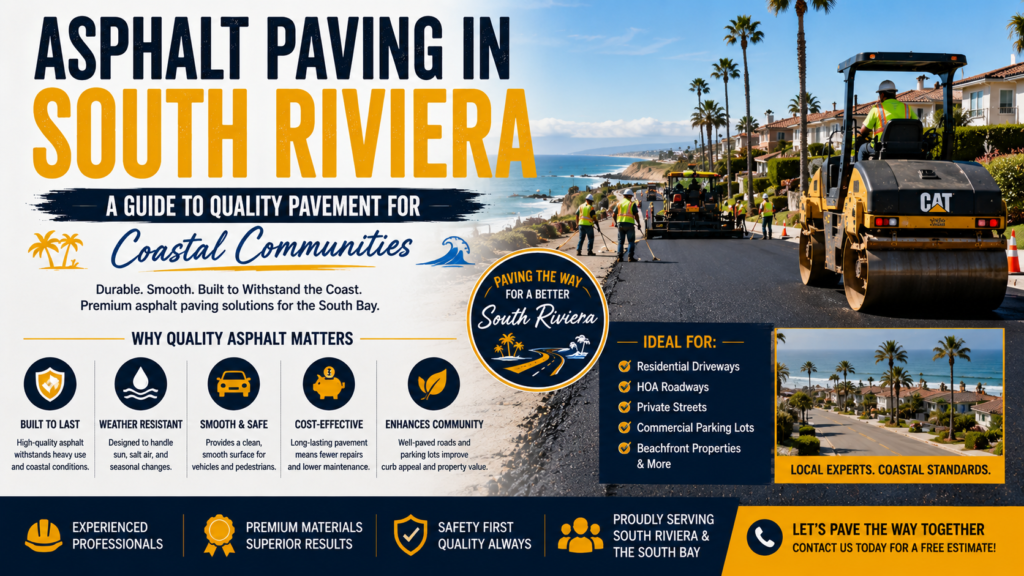
South Riviera is a neighborhood within the Lomita area of Los Angeles County, characterized by quiet residential streets, proximity to the Pacific coastline, and a community-focused character that values well-maintained infrastructure. For homeowners and property managers in South Riviera, asphalt paving is a recurring need whether for driveways, small parking areas, or private road surfaces. Understanding the nuances of asphalt work in coastal Southern California helps residents make smarter choices about when to pave, what materials to use, and how to maintain surfaces over time.
The South Riviera Climate and Its Impact on Asphalt
One of the defining characteristics of South Riviera’s environment is its coastal climate. While temperatures rarely reach extremes, the combination of marine air, moisture, and year-round sunshine creates a unique set of challenges for paved surfaces. Salt air can accelerate oxidation of asphalt binders, and the regular morning marine layer introduces moisture that, over time, can penetrate surface cracks and reach the base layer.
Despite these challenges, asphalt remains the preferred paving surface in this region. Its flexibility allows it to absorb minor ground movements without cracking, and it can be maintained effectively with sealcoating programs designed specifically for coastal conditions.
Residential Driveway Paving in Coastal Communities
The driveway is often the first paved surface a homeowner maintains, and in communities like South Riviera, it also plays a significant role in curb appeal. A freshly paved black asphalt driveway creates a clean, professional appearance that complements the well-kept character of the neighborhood.
Quality driveway paving in South Riviera begins long before the first scoop of hot mix asphalt arrives. Site preparation involves:
- Removing existing deteriorated asphalt if present.
- Grading the sub-grade to ensure proper drainage away from the structure.
- Installing or repairing aggregate base material to the appropriate depth.
- Compacting the base with a vibratory roller or plate compactor.
Only after these steps are complete should the asphalt surface be applied. Skipping or rushing base preparation is the most common cause of premature driveway failure.
Types of Asphalt Mixes Used in Southern California
Not all asphalt is the same. The mix design the proportion of aggregate, binder, and filler significantly affects how a pavement performs in a given climate and under specific loading conditions. In Southern California, most residential and light commercial paving uses dense-graded hot mix asphalt (HMA), which provides a smooth, impermeable surface that resists moisture infiltration.
For high-traffic applications or areas where heavy vehicles regularly pass, a more robust mix with larger aggregate particles may be specified. Your Asphalt Contractor South Riviera should be able to explain which mix is appropriate for your specific project and conditions.
Crack Filling and Its Importance
In South Riviera’s coastal environment, addressing cracks promptly is particularly important because moisture from morning dew, fog, and occasional rain can readily penetrate any opening in the surface. Once water reaches the base layer, the integrity of the entire pavement structure is at risk.
Crack filling is a straightforward maintenance operation that involves cleaning existing cracks, removing loose debris, and applying a flexible asphalt-based filler compound. When performed regularly typically every one to two years for surfaces in active use crack filling prevents minor cosmetic defects from escalating into structural failures that require full replacement.
Parking Lot Paving for Small Commercial Properties
South Riviera’s zoning includes a mix of residential and small commercial properties. For business owners operating in the area, the condition of the parking lot is directly tied to customer experience and safety. Damaged, potholed, or faded parking surfaces can deter customers and create liability concerns.
Commercial parking lot paving involves additional planning compared to residential driveways. Traffic flow design, ADA-compliant accessible spaces, drainage infrastructure, and line striping all need to be coordinated as part of the paving project. A qualified asphalt contractor with commercial experience will address each of these components as part of a comprehensive scope of work.
Sealcoating in Coastal Conditions
Because of the enhanced UV exposure and salt-air conditions in South Riviera, sealcoating takes on added importance. Sealcoating protects asphalt from UV oxidation, replenishes surface oils, and creates a barrier against moisture infiltration. It also restores the deep black color of aging pavement, which has both aesthetic and functional benefits a darker surface also absorbs heat more effectively and can assist with surface drying after rainfall.
The ideal time to apply sealcoat in Southern California is during dry weather with temperatures above 50 degrees Fahrenheit, conditions that are available throughout most of the year in the South Bay. Property owners should allow newly sealcoated surfaces to cure for at least 24 hours before allowing vehicle traffic.
Pothole Repair: When Patching Is Appropriate
Potholes are among the most common forms of asphalt distress. They typically form when water infiltrates existing cracks, reaches the aggregate base, and weakens it to the point where the surface layer collapses under vehicle loads. In coastal communities where moisture is a constant factor, potholes can develop relatively quickly if surface maintenance is deferred.
Infrared patching and traditional remove-and-replace patching are the two most common repair methods. Infrared patching heats the existing asphalt to make it workable again, allowing the damaged section to be reworked without a visible patch boundary. Traditional patching involves saw-cutting around the damaged area, removing the material, and replacing it with fresh hot mix. Both approaches have appropriate applications depending on the extent and nature of the damage.
Long-Term Maintenance Planning for South Riviera Properties
Asphalt is a long-term investment, and properties in South Riviera benefit from following a structured maintenance schedule. A typical maintenance plan for a residential driveway or small commercial lot might include:
- Annual inspection to identify new cracks, drainage issues, or base settling.
- Crack filling every one to two years as needed.
- Sealcoating every two to three years.
- Overlay or full replacement after 15 to 25 years depending on the degree of maintenance and traffic patterns.
Following this kind of plan can roughly double the useful life of an asphalt surface compared to a completely reactive approach.
Conclusion
Asphalt paving in South Riviera requires an understanding of the local coastal environment and a commitment to quality workmanship. From proper base preparation to regular sealcoating and crack maintenance, the principles of good pavement management are consistent: proactive care extends service life, reduces long-term expense, and keeps surfaces safe for all users. Whether you are planning a new installation or maintaining an existing surface, the knowledge of what goes into quality asphalt work positions you to make better decisions and achieve lasting results.