Dry Storage in Jeddah: A 2026 Warehousing Guide
Choosing reliable dry storage in Jeddah can decide whether a shipment arrives intact or spoils on a hot loading dock. As Saudi Arabia deepens its role as a Red Sea trade hub under Vision 2030, businesses face rising demand for climate-stable, secure warehousing. This guide breaks down how ambient dry storage works, what it costs, and how to pick a partner that protects your inventory year-round.
Whether you move packaged food, electronics, textiles, or industrial components, the right facility keeps goods dry, ventilated, and traceable. Below, we cover practical selection criteria, a cost comparison, and answers to the questions logistics managers ask most.
What Dry Storage Means for Saudi Businesses
Dry storage refers to warehousing for goods that do not require refrigeration but still need protection from humidity, dust, and temperature swings. In Jeddah’s coastal climate, where summer humidity can climb sharply, ventilation and moisture control matter as much as square footage.
A well-run dry warehouse maintains stable ambient conditions, keeps pallets off damp floors, and separates chemicals from food-grade stock. This prevents mold, corrosion, and cross-contamination. Investing in professional Dry Storage in Jeddah gives your goods this level of protection year-round.
Typical Goods Suited to Dry Storage
- Canned and packaged foods, grains, and beverages
- Consumer electronics and packaged appliances
- Textiles, apparel, and paper goods
- Automotive and industrial spare parts
- Cosmetics and non-perishable retail stock
For temperature-sensitive items, dry storage is not enough. Perishables need dedicated Frozen Storage to preserve quality and meet food-safety rules.
How Much Does Dry Storage in Jeddah Cost?
Pricing depends on volume, contract length, and value-added services such as pick-and-pack or inventory reporting. Most providers bill per pallet position or per square meter, with short-term rates costing more than annual contracts.
| Storage Model | Typical Basis | Best For |
|---|---|---|
| Per pallet position | Monthly rate per pallet | Steady, predictable inventory |
| Per square meter | Rented floor area | Bulky or irregular items |
| Shared 3PL space | Usage-based fees | Startups and seasonal peaks |
| Dedicated warehouse | Fixed lease | High-volume distributors |
To budget accurately, ask whether handling, security, and reporting are bundled or charged separately. Hidden receiving and dispatch fees often surprise first-time renters.
Key Features of a Quality Dry Warehouse
Not all facilities deliver the same standard. When you tour a site, focus on the details that protect your goods and keep your supply chain moving.
Climate and Moisture Control
Look for insulated roofing, cross-ventilation, and raised racking. These features fight the humidity that damages cardboard, metal, and packaged food in coastal Jeddah.
Security and Traceability
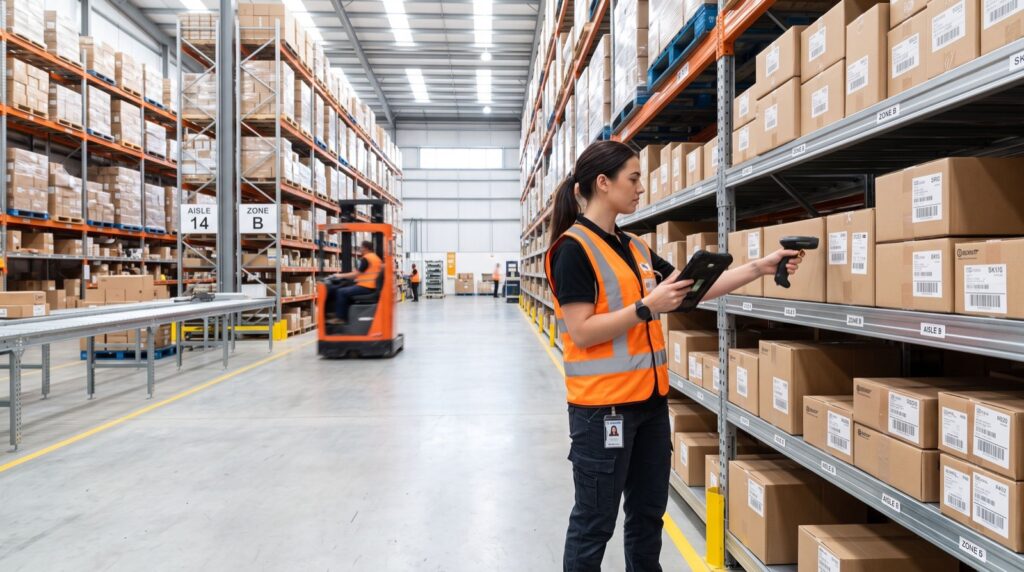
Modern warehouses use CCTV, access control, and barcode or RFID tracking. Real-time inventory visibility lets you confirm stock levels without a site visit.
Location and Access
Proximity to Jeddah Islamic Port and major highways cuts transit time and cost. Facilities near industrial zones also simplify last-mile delivery across the western region.
For expert help evaluating a site, work with quality service providers who understand local logistics conditions and can benchmark a facility against your needs.
Dry Storage vs. Other Warehousing Options
Selecting the right storage type saves money and prevents spoilage. Match the storage environment to your product’s sensitivity.
- Dry (ambient) storage — non-perishables that tolerate normal indoor conditions.
- Cold storage — chilled goods such as dairy, produce, and pharmaceuticals.
- Frozen storage — meat, seafood, and frozen ready-meals held below freezing.
- Bonded storage — imported goods held before customs clearance.
Many Saudi distributors combine models under one 3PL contract, keeping ambient and temperature-controlled stock in the same complex to streamline fulfillment.
Why Warehousing Demand Is Rising in Saudi Arabia
Saudi Arabia’s logistics sector is expanding rapidly as e-commerce and non-oil trade grow. The Kingdom aims to become a top global logistics center, and the General Authority of Statistics tracks steady growth in trade and transport activity. You can review official economic indicators through the General Authority for Statistics.
This growth means more competition for quality warehouse space in Jeddah. Booking capacity early, especially before seasonal peaks like Ramadan and Hajj, protects your fulfillment timelines.
Practical Tips Before You Sign a Contract
Drawing on years of hands-on logistics experience, here are field-tested steps that reduce risk:
- Request a trial period or short-term contract before committing long-term.
- Confirm insurance coverage and liability limits for stored goods.
- Audit the warehouse management system for real-time reporting.
- Check dock capacity to avoid delays during peak receiving windows.
- Ask about pest control schedules and food-grade certification if relevant.
One overlooked tip: measure how fast a provider processes a returns batch. Efficient reverse logistics often reveals the true quality of a warehouse team.
How Technology Is Reshaping Dry Warehousing
Warehousing in Jeddah is no longer just racks and forklifts. Digital tools now decide which facilities win contracts and which lose stock to errors.
Cloud-based warehouse management systems track every pallet from arrival to dispatch, giving you visibility from any device. Automated alerts flag low stock, expiring goods, and receiving bottlenecks before they hurt your fulfillment.
Features Worth Paying For
- Real-time dashboards showing stock levels by SKU and location
- Integration with your e-commerce or ERP platform
- Automated cycle counting to keep inventory accurate
- Environmental sensors that log temperature and humidity
- Digital proof of delivery for every outbound order
Even for ambient goods, these features pay for themselves by cutting shrinkage and speeding order turnaround. When comparing quotes, weigh the software as heavily as the storage rate itself.
Preparing Goods for Long-Term Dry Storage
How you prepare inventory before it enters the warehouse affects its condition months later. A little preparation prevents expensive losses.
Wrap moisture-sensitive items in protective film, use desiccant packs inside cartons, and palletize goods so air circulates freely. Avoid stacking heavy loads on fragile packaging, and always label boxes with contents and dates.
In Jeddah’s climate, elevating stock on pallets rather than resting it on the floor is essential. Concrete floors absorb ground moisture that can migrate into cardboard overnight, so this simple habit protects entire shipments.
Frequently Asked Questions
What is the difference between dry storage and cold storage?
Dry storage holds goods at normal indoor temperatures with humidity control, while cold storage keeps products chilled or frozen. Choose dry storage for non-perishables and refrigerated options for temperature-sensitive items.
How do I calculate how much dry storage space I need?
Estimate your peak pallet count, add room for growth, and factor in aisle space for forklifts. A good provider will help you model space needs based on your turnover and seasonality.
Is dry storage in Jeddah suitable for food products?
Yes, packaged and shelf-stable foods store well in a certified dry warehouse with proper ventilation and pest control. Perishable food, however, needs cold or frozen facilities to stay safe.
Can I combine dry and frozen storage with one provider?
Many Saudi 3PL providers offer both ambient and temperature-controlled zones in a single complex, which simplifies inventory management and reduces transport between facilities.
Conclusion
Reliable dry storage in Jeddah protects inventory, controls costs, and keeps your supply chain resilient as Saudi trade accelerates through 2026. Evaluate climate control, security, location, and reporting before you commit, and match each product to the right storage environment. Ready to secure dependable warehouse space? Partner with an experienced Saudi storage team today and give your goods the protection they deserve.